
School Overview
We have 10 classrooms from nursery (ages 2-4) to Primary Seven (ages 12-16), which is the highest class. After P7, students test to see if they can matriculate to secondary school. If they pass the national exam, they can continue their education. If not, their education ends.
2024-25 Statistics
- 80 students: 37 female, 43 male
- 64 boarding students
- 16 day students
The majority of the students board at the school and stay in dormitories. The girls’ dormitory is housed inside the school grounds, where a teacher/matron stays with them. Because there is not enough room in the school premises, the boys’ dormitory is housed near the school in a rented house where two male teachers stay and supervise them.
Our typical week at school looks like this:
Each Friday afternoon, our students conduct a formal debate. One example is the following topic: Plants are better than animals. If you ever visit the school, it is truly worth experiencing!
On Saturdays, while there are chores to do and laundry to wash, there is guaranteed to be a soccer match on the local community pitch! As of June 2025, the school received soccer balls and soccer jerseys, which the school uses with great pride! Before this, students played with balls constructed out of plastic bags tied together.
Every Sunday, students attend a church of their faith. The rest of the day is for rest, play, and study.
Uganda and Kisoro Background
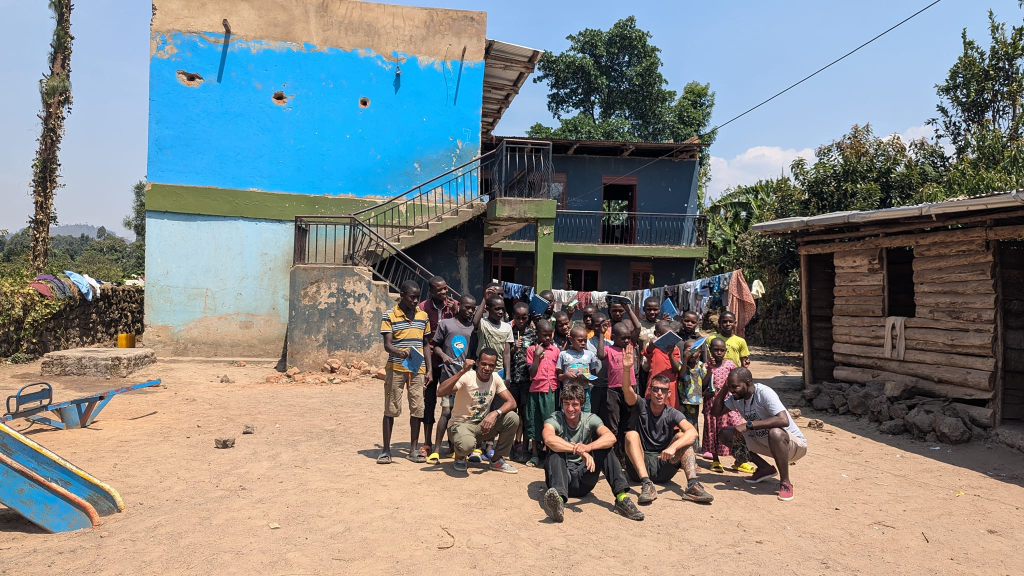
With a median income of around $600 a year, Ugandans live on less than $2 a day. Many families don’t allow their children to attend school, as it’s more beneficial to keep them home to help in the fields. By providing a quality education to the children in and around the village of Rubona, the Asabas are hoping to help break that cycle of poverty for those who attend Kunihira, which translates to “Hope.”
In addition to providing students with a safe space to learn, Kunihira also provides each student with two warm meals each day — a notable offering in a country that suffers from vast hunger. They also give each child two school uniforms, which are a requirement of the Ugandan government.
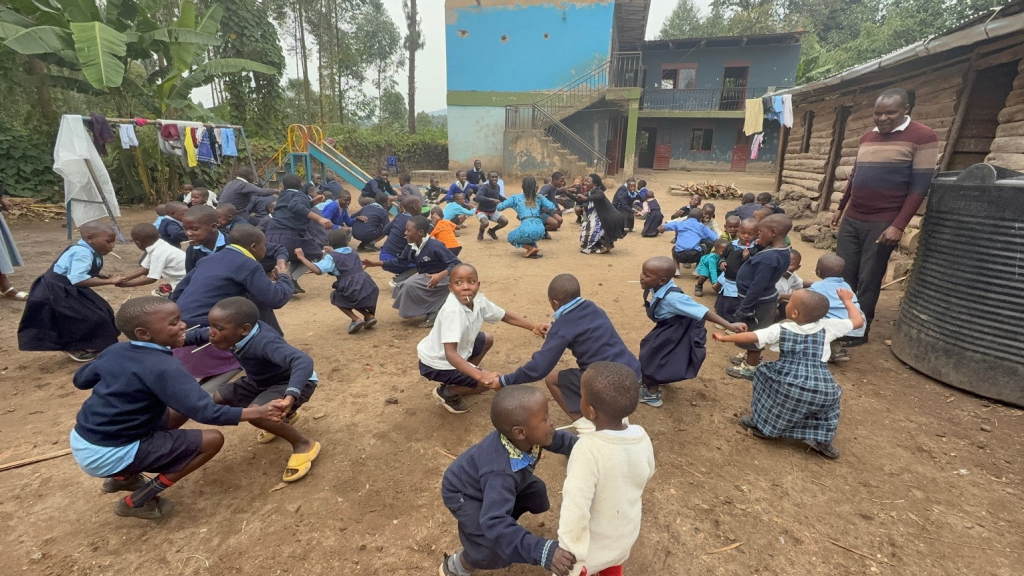
Meals
Typically, meals include posho, corn porridge. Sometimes it is served with beans and vegetables mixed together.
Occasionally, bananas, rice, sweet potatoes, a peanut sauce, and watermelon supplement the diet. On rare special occasions, beef is available.
In the autumn of 2025, generous donations enabled us to acquire two cows, which will help improve nutrition by providing milk to the students. In addition, Merriam will be starting a poultry project, allowing us to add eggs to the students’ diet and eventually the occasional chicken meal—highly prized, as chicken is more expensive than beef in Uganda.
Current Needs
- Student sponsorship. Helping cover the costs of sending students to school includes:
- Uniforms, meals, housing, health care, education, staffing, supplies, electricity, water, recreation.
- Solar lighting. Electricity is unreliable, so having some solar to power lighting needs is important for classrooms and dormitories. This will also reduce our monthly costs.
- Land acquisition. There are always pressing needs, but the most critical right now is land acquisition, as our current campus is very small. With land available for expansion, we can construct an additional latrine, as the one we currently use is very old and in dire need of relocation and proper septic design. This will be Phase 1.
Phase 2. Build new dormitories that are more spacious, better built, and include both boys and girls on the premises.
Phase 3. Build a library, a computer lab, a dining hall, and a sickbay.
Phase 4. Build 10 new classrooms.
Phase 5. Repair and reconstruct the existing school site for skills training, storage, and animal housing.
- Staffing. Add staff as needed and provide teacher training to improve our academics and teaching practices.
Future Vision
In time, we plan to add on a Skills Centre, where those who are unable to matriculate to secondary school can continue their education to learn skills that can make them able to earn an income that can sustain them in the future with their families.
Additionally, we aim to establish a school library that provides the Kisoro community with free access to books—ideally, linking to other libraries in Uganda, although there are few of them.
Ultimately, we would like to extend the help we provide the students to their families. Including the opportunity for skills training and adult literacy education, allowing these families income-generating options beyond subsistence farming.